20 Best Things to Do in Quito
Discover 20 of the best things to do in Quito, from its Historic Center and mountain viewpoints to local food, markets, museums, and street art.
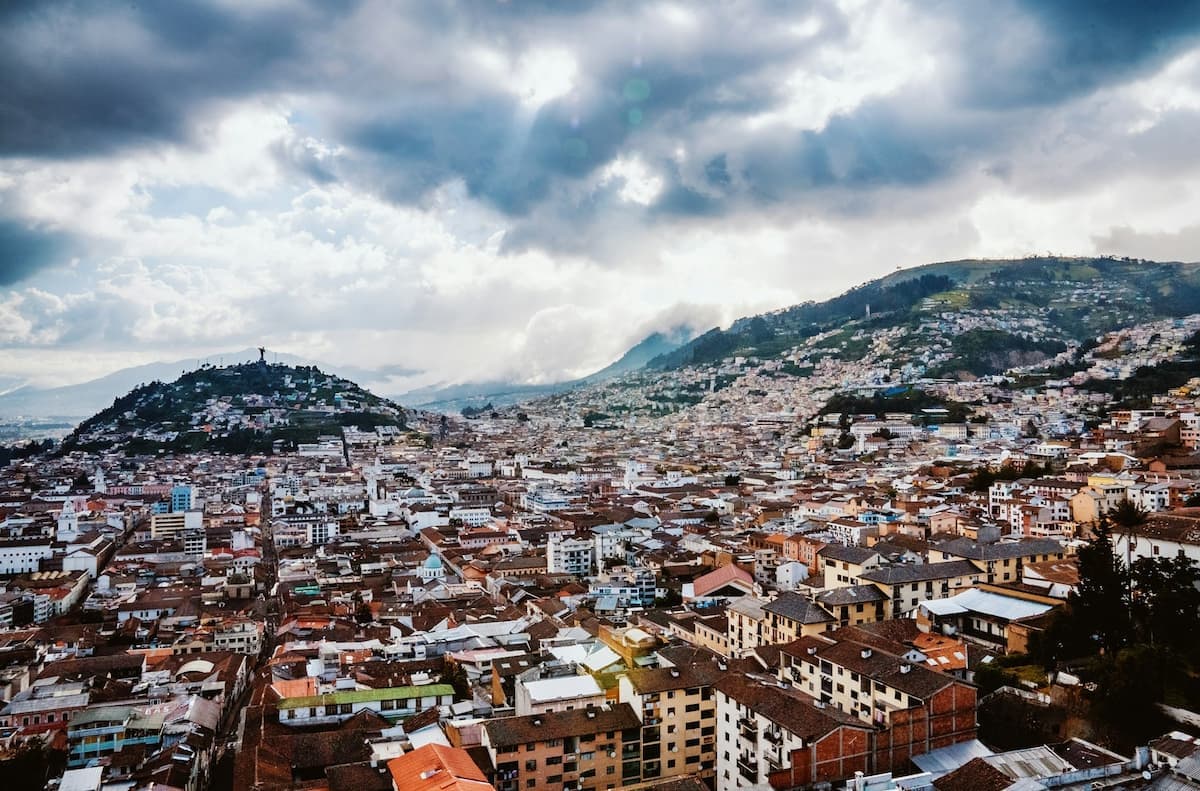
Stepping out in Quito hits you twice: first with the breathtaking sight of gold-leafed church domes framed by towering Andean peaks, and second with the altitude. At nearly 2,850 metres above sea level, even a casual walk up a cobblestone alley will leave you out of breath.
While most travelers come straight for the UNESCO-listed Historic Center, Quito’s real charm lies in its contrasts. You can sip single-origin Ecuadorian hot chocolate in a century-old courtyard in the morning, ride a cable car up the side of a volcano by midday, and hunt for bold political street art before dinner.
Take it slow, drink plenty of water, and skip the rigid checklists. Here are 20 of the best things to do in Quito to truly get a feel for the city.
1. Explore Quito’s Historic Center
If you only have one day in Quito, spend it here.
The Historic Center is a sprawling maze of steep cobblestone streets, whitewashed colonial facades, and towering grand plazas. Recognized as one of Latin America’s best-preserved historic quarters, it was designated a UNESCO World Heritage Site in 1978 for good reason.
While you can easily wander on your own, the real context is hidden behind those thick church walls. Joining a local guide transforms what you see from "pretty architecture" into a story of indigenous resilience, Spanish conquest, and religious history.

2. Sit and Watch Daily Life in Plaza Grande
Plaza Grande is where Quito’s political and everyday life overlap.
Bordered by the Presidential Palace, the Metropolitan Cathedral, and City Hall, it’s far more than a photo stop. Grab a shaded bench near the central monument and take 20 minutes to slow down.
You’ll see street vendors selling roasted broad beans, politicians giving impromptu speeches, shoe shiners working their magic, and elderly locals chatting over the morning news. It’s the single best spot for people-watching in the city.
3. Step Inside La Compañía de Jesús
Don't let the subtle stone facade fool you. The moment you cross the threshold of La Compañía de Jesús, almost every square inch of the interior glows with intricate gold leaf, carved cedar, and vibrant paintings.
Look closely at the ceiling beams and columns. You’ll spot native Ecuadorian flora and indigenous symbols subtly woven into traditional European baroque art—a signature style of the famous Quito School of Art.
Tip: Photography inside is strictly prohibited, and access is restricted during mass, so time your visit for mid-morning.
4. Cross Plaza de San Francisco
Sprawling across a massive stone plateau, Plaza de San Francisco is dominated by the monumental church and monastery of the same name.
Historically a bustling trade hub and indigenous market long before the Spanish arrived, the plaza still feels like a major crossroads today. Stand near the center of the square to take in the sheer scale of the volcanic peaks rising directly behind the church towers.
It’s also the perfect natural resting place as you walk between Plaza Grande and La Ronda.
5. Climb the Basílica del Voto Nacional
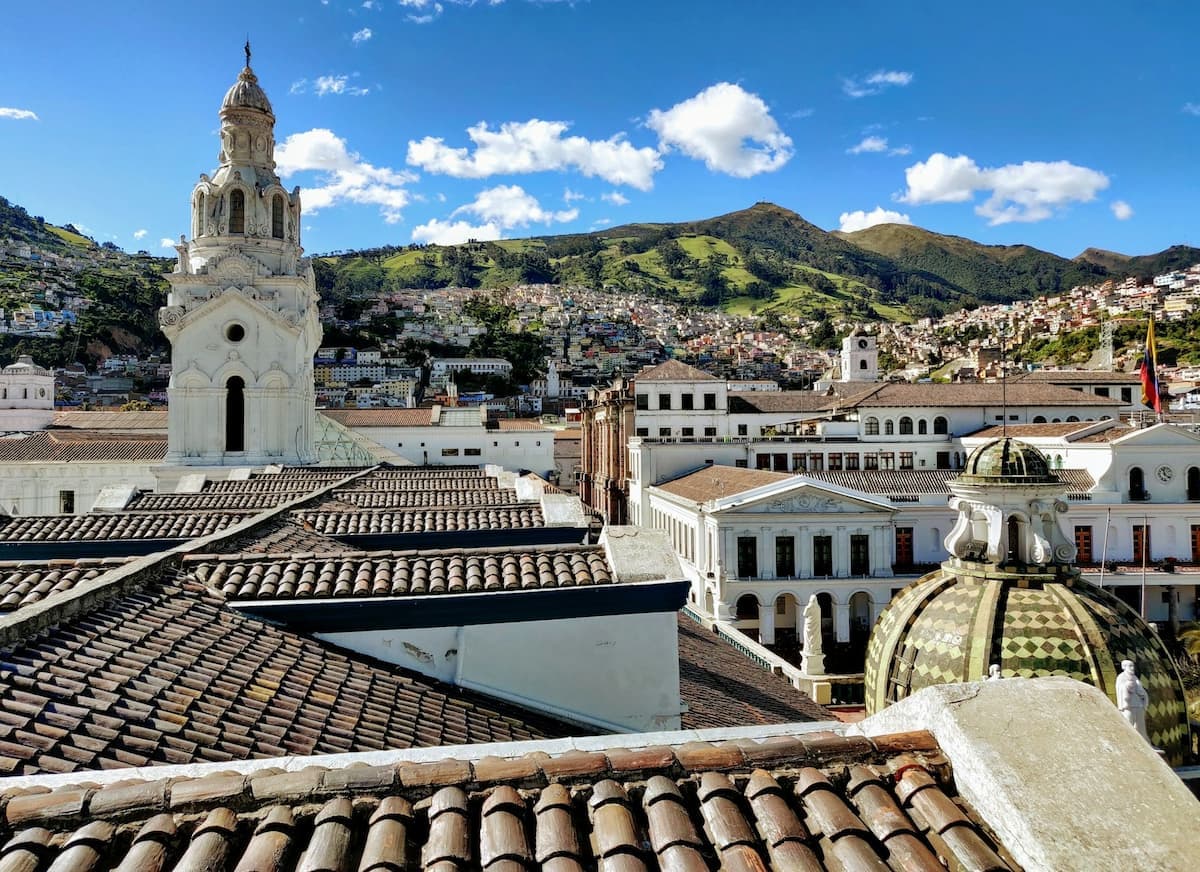
This towering neo-Gothic cathedral dominates Quito’s skyline, but its most fascinating detail is up close: look closely at the gargoyles jutting out from the stone walls, and you’ll spot native Ecuadorian animals like iguanas, armadillos, and Galápagos tortoises instead of mythical beasts.
For the best panorama in central Quito, head inside and climb toward the spires.
The final ascent requires crossing a narrow wooden walkway above the main nave and climbing a steep, exposed metal ladder up the outside of the tower. It’s not for anyone with severe vertigo, but the views from the top are unmatched.
6. See the City from El Panecillo
Standing on a rounded hill overlooking the Historic Center, the towering aluminum statue of the Virgin of Quito keeps watch over the valley.
From the top of El Panecillo, the unique geography of Quito immediately clicks: you can see how the city squeezes into a long, narrow corridor flanked by dramatic volcanic ridges.
Practical tip: Skip the steep walk up the stairs from the Historic Center—the stairs are notoriously isolated and unsafe for tourists. Grab a quick Uber or registered taxi to the top instead.
7. Ride the TelefériQo Up Pichincha
For a truly high-altitude perspective, hop on the TelefériQo. This cable car sweeps you up the eastern slopes of the Pichincha Volcano, dropping you off at a dizzying 4,000 metres above sea level. I’d skip this on a cloudy day. The ride is still impressive, but the views are the main reason to come.
On a clear morning, you’ll step out to sweeping views of Quito below and snow-capped peaks in the distance. There's a famous swing overlooking the valley and several hiking trails branching out into the high paramo ecosystem.
Pack a warm jacket, rain gear, and water—the weather up here changes in seconds, and the thin air makes even gentle walking surprisingly intense. Save this for your second or third day once you've acclimatized.
8. Visit the Middle of the World (Mitad del Mundo)
Standing in both the Northern and Southern Hemispheres at once is a classic Ecuador bucket-list item.
At the official Ciudad Mitad del Mundo complex north of the city, you can pose next to the iconic equatorial monument and explore small cultural exhibits. While 18th-century French geodesic calculations placed the line here, modern GPS shows the actual magnetic equator is a few hundred metres away at the neighboring Intiñan Solar Museum.
Intiñan is a lot more hands-on—you can try balancing an egg on a nail or watch water drain straight down without a vortex. If you’re already making the trip north of Quito, I’d visit both rather than choosing between them. The main monument is better for the classic photo; Intiñan is more interactive.

9. Stroll Down La Ronda
La Ronda is a picture-perfect pedestrian lane tucked into the southern corner of the Historic Center.
Lined with restored 17th-century townhouses, hanging flower baskets, and wrought-iron balconies, it was once the bohemian haunt of Quito’s poets, musicians, and artists. Today, it’s home to traditional artisan workshops, sweet shops, and small cafes.
It’s prettier and calmer during the day, but if you want atmosphere, come back in the early evening when the bars and cafés start filling up.
10. Taste Single-Origin Ecuadorian Chocolate
Ecuador produces some of the finest aromatic cacao in the world, and Quito is the ideal place to sample it.
Forget mass-produced candy bars. Local tasting rooms and artisanal chocolate shops around the city guide you through dark chocolate varieties crafted from single-origin beans harvested in the Amazon and the coastal lowlands.
You'll learn to spot subtle flavor notes—from floral and fruity to woody and earthy—and see how local chocolatiers combine cacao with Andean fruits, sea salt, or native spices.
11. Eat Your Way Through Traditional Quiteño Food
Food in Quito is hearty, comforting, and deeply tied to the high-altitude Andean climate.
Start with a steaming bowl of locro de papa—a rich potato soup served with a thick slice of fresh avocado and melted Andean cheese. Move on to llapingachos (crispy, stuffed potato pancakes), savory empanadas de viento dusted with sugar, or tender roasted pork (hornado).
Don't leave without tasting a cup of hot canelazo, a spiced cinnamon and sugarcane alcohol drink that warms you up the second the chilly mountain evening sets in.

12. Grab Lunch at Mercado Central
For an authentic, budget-friendly meal, bypass the tourist restaurants and head straight to Mercado Central.
This bustling local market is packed with vibrant stalls selling tropical fruits, fresh-cut flowers, and mountain produce. On the upper food floor, local cooks serve up generous portions of traditional meals to office workers and neighborhood residents.
Find a crowded counter—usually a sign of fresh, delicious food—and order a plate of ceviche de chochos (a refreshing vegetarian bean ceviche) or fresh-squeezed blackberry juice.
13. Uncover Everyday History at Museo de la Ciudad
Housed in a beautifully restored 16th-century hospital building, the City Museum takes a different approach to Quito's past.
Rather than focusing solely on famous battles or spanish governors, its interactive galleries reveal how ordinary residents—from indigenous traders to colonial artisans—lived, worked, and survived over centuries.
Walking through its quiet open-air courtyards and historic corridors provides crucial context before you explore the rest of the city.
14. Admire Pre-Columbian Art at Museo Casa del Alabado
Located in a quiet 17th-century mansion steps from Plaza de San Francisco, Museo Casa del Alabado holds one of Ecuador’s finest collections of ancient art.
Instead of organizing artifacts chronologically, the museum groups its thousands of pre-Columbian ceramic, stone, and metal objects by spiritual themes, nature, and ancestral rituals.
It’s a striking reminder that thousands of years of rich artistic and cultural traditions flourished in the Andes long before the Incas or Spanish arrived.
15. Dig Into Quito’s Darker Stories
Behind Quito's gilded church altars and picturesque plazas lies a tumultuous history filled with political rivalries, public executions, and centuries-old urban legends.
Places like the Alberto Mena Caamaño Museum—famous for its wax figure reenactment of the 1810 massacre of local patriots—and the eerie crypts below historic monasteries reveal the darker, shadowier side of the capital.
If you enjoy true history, political intrigue, or ghost stories, exploring these sites with a local storyteller offers a thrilling break from standard sightseeing.

16. Experience Modern Vibe in La Floresta
After a few hours in the Historic Center, La Floresta feels like a completely different Quito.
This leafy, artistic neighborhood is Quito’s creative hub, filled with independent coffee shops, craft breweries, art galleries, and farm-to-table restaurants. It feels relaxed and residential—ideal for a lazy afternoon.
Wander down residential side streets to admire colorful murals, grab a specialty pour-over coffee, or catch an indie film at the historic Ocho y Medio cinema.
For advice on choosing your base, check out our guide to the best neighborhoods in Quito.
17. Hunt for Street Art & Murals
Quito’s urban art scene is vibrant, vocal, and deeply political.
Across neighborhoods like La Floresta and San Roque, large-scale murals tackle bold themes: indigenous rights, environmental conservation, anti-colonialism, and modern Ecuadorian identity.
While you'll bump into impressive murals randomly as you explore, taking a street art tour with a local artist helps unpack the hidden symbols, cultural history, and community stories behind the paint.

18. Stretch Your Legs in Parque La Carolina
Want to see how local Quiteños spend a sunny weekend? Spend an hour strolling through Parque La Carolina in the modern financial district. If you only have two days in Quito, I wouldn’t prioritize La Carolina over the Historic Center or TelefériQo. It’s more interesting if you want to see everyday local life rather than major sights.
This massive urban park comes alive with families playing volleyball, runners tackling the tracks, paddleboats on the small lake, and food stalls selling fresh snacks.
It’s also home to the Quito Botanical Garden, which houses incredible glass greenhouses showcasing native cloud forest orchids and Amazonian flora.
19. Take in the View from Parque Itchimbía
Perched on a high ridge east of the Historic Center, Parque Itchimbía offers one of the crispest panoramic views of the entire city.
The main focal point inside the park is the glass-and-iron Palacio de Cristal, brought over piece-by-piece from Belgium in the late 19th century and now used for cultural exhibitions.
Bring a light jacket and arrive in the late afternoon to watch the sunset paint the white churches of the old town and the volcanic peaks behind them.
20. Start Your Trip with a Guided Walking Tour
If there’s one golden rule for Quito, it’s to book a walking tour on your very first morning.
A knowledgeable local guide will help you get your bearings, teach you how to navigate the city safely, and point out authentic local spots to eat that you’d easily pass by on your own. Plus, asking a local for recommendations is the absolute best way to plan the rest of your itinerary.
Whether you're interested in food, photography, history, or modern culture, there's a route for you. Check out our guide to choosing a free walking tour in Quito to pick the right match.
How Many Days Do You Need in Quito?
Two to three days is the sweet spot for a first visit.
- Day 1: Acclimatize to the altitude with a slow walking tour through the Historic Center and a relaxed evening in La Ronda.
- Day 2: Ride the TelefériQo in the morning for views, then spend the afternoon exploring food and street art in La Floresta.
- Day 3: Take a half-day trip to Mitad del Mundo, then enjoy sunset views from Itchimbía or El Panecillo.
Real-World Tips for Visiting Quito
- Respect the altitude: At nearly 2,850 meters, altitude sickness can hit anyone. Drink plenty of water, avoid heavy meals on your first night, and don't rush up steep hills right after landing.
- Layer up: Quito experiences "four seasons in one day." Bright morning sunshine can quickly give way to afternoon cloudbursts and chilly mountain nights. Always carry a waterproof jacket and a warm layer.
- Getting around safely: The Historic Center is easy to walk during the day, but Quito is a long city. Use the clean, efficient Metro system or apps like Uber and Cabify—especially at night or when heading up to isolated viewpoints like El Panecillo.
- Keep your belongings discreet: Like any major Latin American hub, petty theft happens. Keep your phone and camera tucked away when walking through crowded markets or public squares.
For a deeper dive into safety, read Is Quito Safe for Tourists?.
Discover More of Quito
Quito is far more than just a quick layover on the way to the Galápagos or the Amazon.
Once you get past the obvious landmarks, you’ll find a city brimming with warm hospitality, rich indigenous traditions, and modern energy. Take your time, sip local coffee, chat with neighborhood vendors, and let the city reveal itself at its own pace.
Explore Quito with local guides through historic walks, food experiences, street art, cultural stories, and important city landmarks.


QUITO, ECUADOR
Historical and Cultural Free Walking Tour of Quito
3 hours · Free Tour

QUITO, ECUADOR
Otavalo market & Cuicocha lagoon day Tour
10 hours · Cultural Experience
From

QUITO, ECUADOR
Cotopaxi Horseback Ride & Quilotoa Crater Lake Day Tour
10 hours · Nature & Wildlife
From

QUITO, ECUADOR
Quito City Tour: Chocolate & Equator Experience
8 hours · Art & Museums
From

QUITO, ECUADOR
Sleep Among Giants: Ecuador VIP Experience
192 hours · Private Tour
From

QUITO, ECUADOR
Land of Andes and Jungle: Ecuador VIP Experience
216 hours · Private Tour
From
Want to experience Quito beyond the usual sightseeing? Discover its history, culture, and everyday life with our Quito tours and experiences with local guides.
For Local Guides and Tour Operators
Do you run tours in Quito? Join DiscoverYourTour and reach more travelers.
Already have your tour online?
Import your existing listing in minutes
Paste your tour URL and we'll create your listing automatically. No setup fees, no exclusivity, and full control over your tours.

Last reviewed: August 2026. Opening hours, admission prices, transport conditions, tour availability, and safety advice can change, so check current information before travelling.